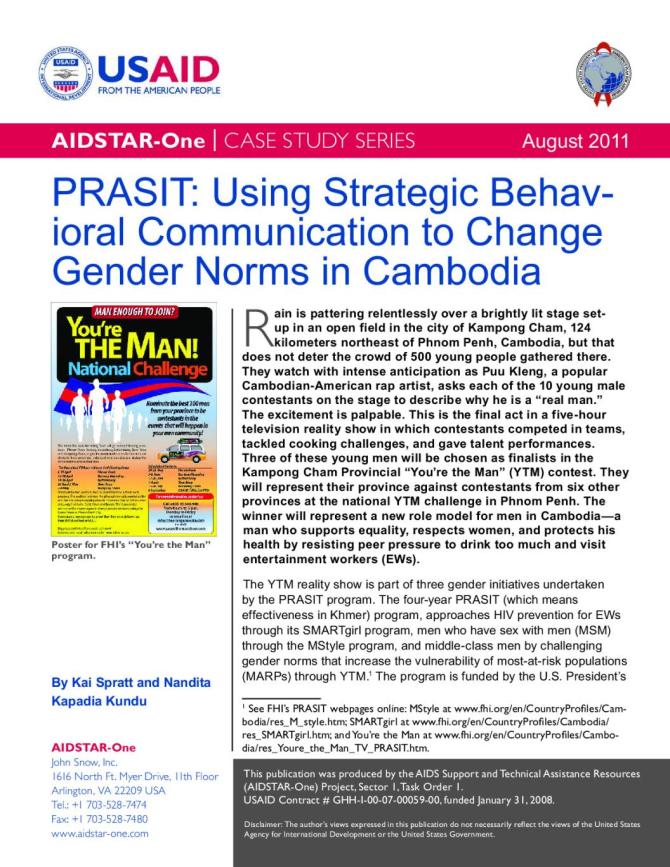
Using Strategic Behavioral Communication to Change Gender Norms in Cambodia
August 30, 2011

Using Strategic Behavioral Communication to Change Gender Norms in Cambodia

After peaking at 3.2 percent in 1997, Cambodia's HIV prevalence among men and women aged 15 to 49 had dropped to 0.9 percent; it is expected to decline to approximately 0.6 percent by 2012 (Ministry of Health [MOH] 2007). HIV in Cambodia has evolved from a generalized epidemic to one concentrated among MARPs: men who are clients of sex workers as well as their spouses; people who inject drugs; male, female, and transgender sex workers, and MSM.
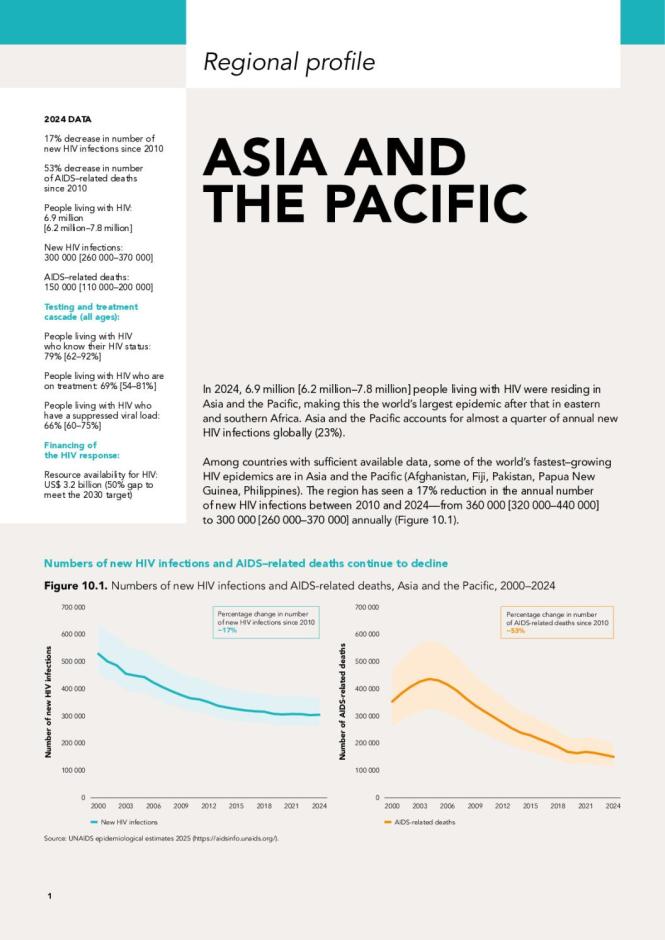
After peaking at 3.2 percent in 1997, Cambodia's HIV prevalence among men and women aged 15 to 49 had dropped to 0.9 percent; it is expected to decline to approximately 0.6 percent by 2012 (Ministry of Health [MOH] 2007). HIV in Cambodia has evolved from a generalized epidemic to one concentrated among MARPs: men who are clients of sex workers as well as their spouses; people who inject drugs; male, female, and transgender sex workers, and MSM.
Organizations:

United States Agency for International Development (USAID)

Share article: