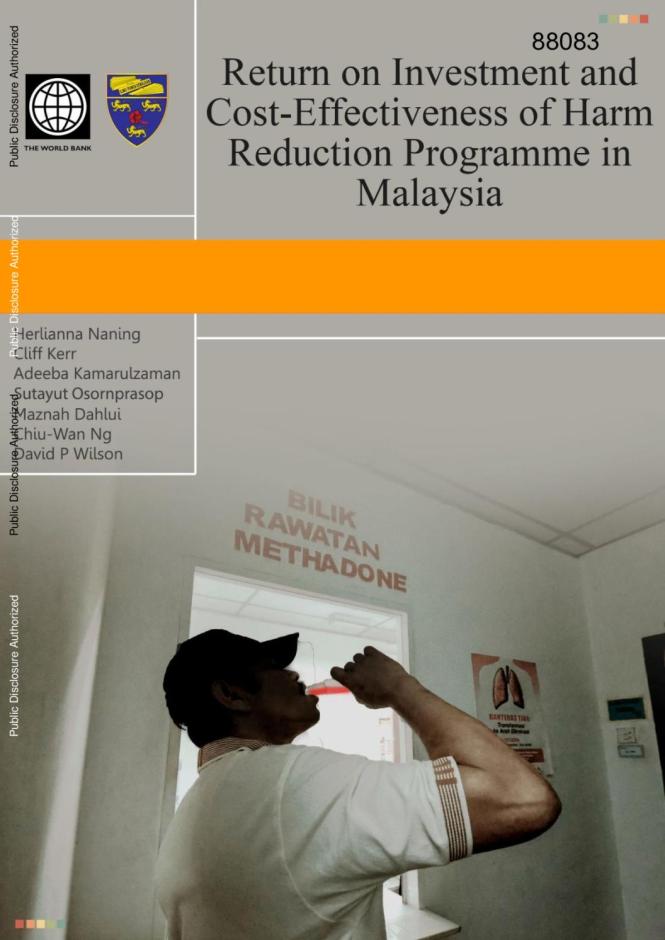
Return on Investment and Cost-Effectiveness of Harm Reduction Programme in Malaysia
December 31, 2013

Return on Investment and Cost-Effectiveness of Harm Reduction Programme in Malaysia

This project aimed to assess whether the harm reduction programmes in Malaysia have been cost-effective

This project aimed to assess whether the harm reduction programmes in Malaysia, which consists of NSP and MMT programmes amongst PWID, have been cost-effective from the perspective of the government by estimating savings in direct health care cost to the government resulting from infections that were averted as a result of the NSP and MMT programmes. The following estimates were included in the estimate of savings in direct health care costs; estimate the cost-effectiveness of the NSP and MMT programmes in terms of costs for the provision of programmes net of health care cost savings for each quality-adjusted-life years (QALYs) gained; estimate the return on investment (ROI) from NSP and MMT programmes where ROI refers to total health care costs saved from averted infections in comparison to total programme costs.

Organizations:

World Bank University of New South Wales (UNSW Sydney) University of Malaya Kirby Institute

Share article: