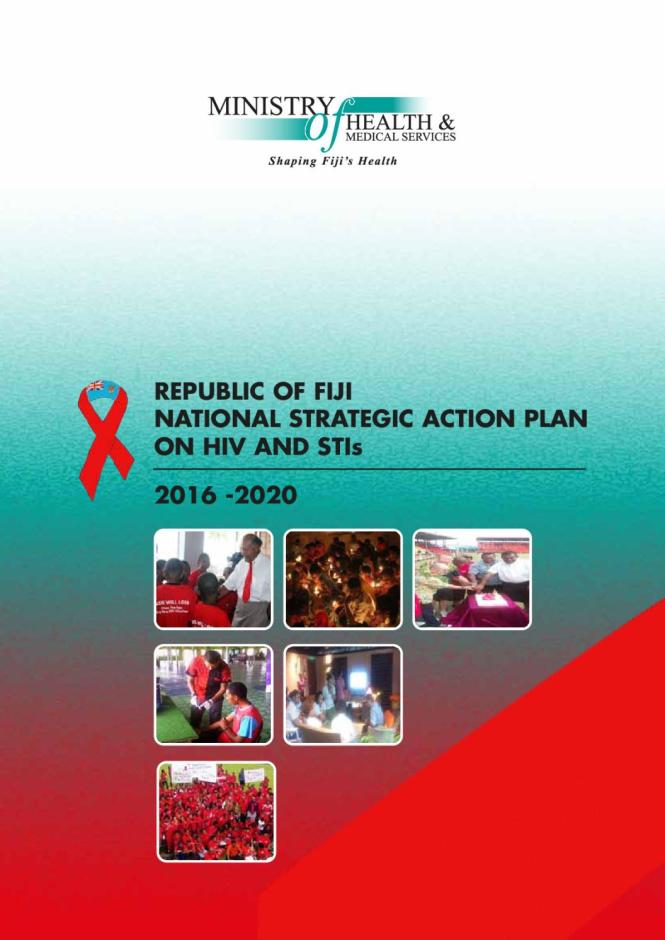
This new plan is aligned with the new directions of the WHO Global Health Sector Strategic Plans on HIV, STIs and Hepatitis; the UNAIDS 90-90-90 Fast Track Initiatives; and the Sustainable Development Goals (SDG). Further, as Fiji strives to implement more responsive National HIV and STI programmes, costing requirements have been identified and clear monitoring and evaluation parameters developed. These will help to track the progress and assess the appropriateness of the response in the context of an evolving country epidemic.
Twenty seven [27] years have elapsed since the first HIV case was reported in Fiji in 1989. Since then, in recognising HIV and AIDS as a development issue, the Government, through the collaboration of stakeholders and the coordination of the Ministry of Health and Medical Services, has sustained a national response, in conformity with the changing profile of the epidemic. As with the previous National Strategic Plan (NSP) for STIs, HIV & AIDS, this strategic plan has been updated and expanded to ensure that the response reaches beyond the health sector. Due to the diverse range of factors that have influenced the epidemic, multi-sectoral partners including other government partners, civil society organisations, faith-based organisations and the key affected populations have been actively involved, not only in the planning and the development of the national response, but also in the implementation of the national plan. Fiji’s coordinated multi-sectoral response is showing positive achievements.
The National Strategic Action Plan (NSP) 2016-2020 on STIs, HIV and AIDS is linked to the Sustainable Development Goals (SDG), the ambitious treatment strategy [90-90-90] and the Fiji Ministry of Health and Medical Services Strategic Plan 2016-2020. This NSP will continue to place strong emphasis on strengthening the multi-sectoral collaboration as undertaken in the previous NSPs.