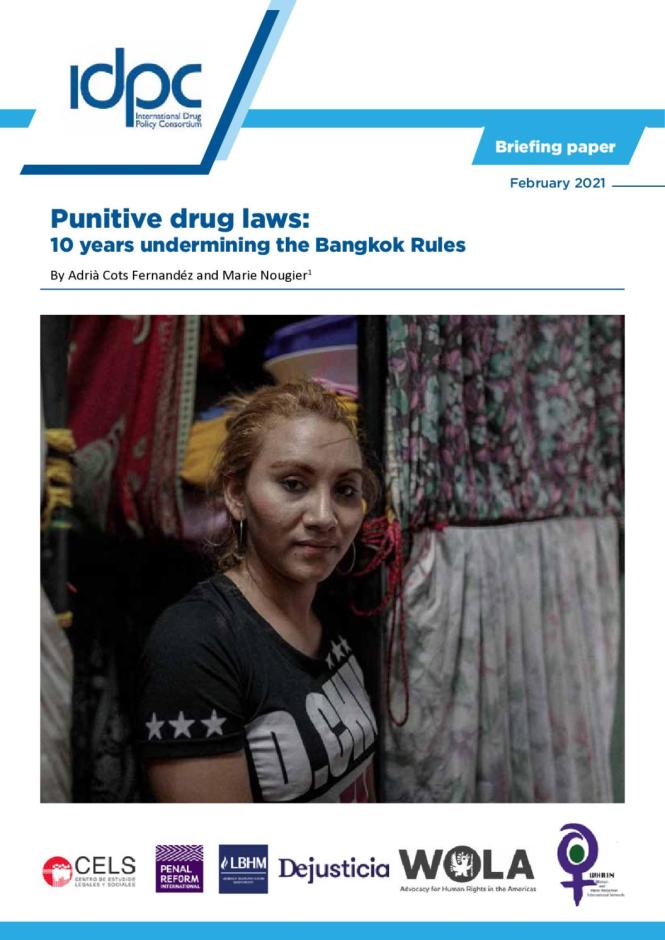
Punitive Drug Laws: 10 Years Undermining the Bangkok Rules
March 16, 2021

Punitive Drug Laws: 10 Years Undermining the Bangkok Rules

For centuries, criminal laws, justice systems, and prisons have been designed for, and by, men. The 2010 United Nations Rules for the Treatment of Women Prisoners and Non-custodial Measures for Women Offenders, also known as the ‘Bangkok Rules’, break away from this history by establishing the first set of international human rights standards that focus on the specific needs and experiences of women deprived of liberty. This briefing paper provides analyses the concrete ways in which punitive drug legislation has impacted upon the achievement of the Bangkok Rules, and offers several recommendations on how to translate the commitments set in the Bangkok Rules into drug policy.
For centuries, criminal laws, justice systems, and prisons have been designed for, and by, men. The 2010 United Nations Rules for the Treatment of Women Prisoners and Non-custodial Measures for Women Offenders, also known as the ‘Bangkok Rules’, break away from this history by establishing the first set of international human rights standards that focus on the specific needs and experiences of women deprived of liberty.

This briefing paper provides analyses the concrete ways in which punitive drug legislation has impacted upon the achievement of the Bangkok Rules, and offers several recommendations on how to translate the commitments set in the Bangkok Rules into drug policy.
 

Organizations:

International Drug Policy Consortium (IDPC)

Share article: