Prevalence of Human Immunodeficiency Virus Infection, Risk Behavior, and HIV Knowledge among Tuberculosis Patients in Afghanistan
November 30, 2007

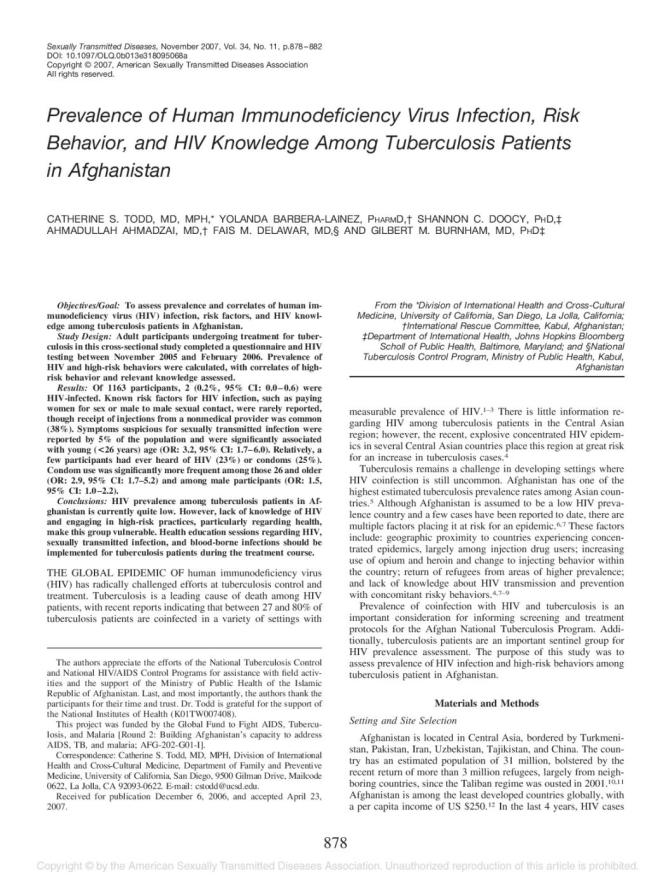
Prevalence of Human Immunodeficiency Virus Infection, Risk Behavior, and HIV Knowledge among Tuberculosis Patients in Afghanistan

This document aims to assess prevalence and correlates of human immunodeficiency virus (HIV) infection, risk factors, and HIV knowledge among tuberculosis patients in Afghanistan.

The global epidemic of human immunodeficiency virus (HIV) has radically challenged efforts at tuberculosis control and treatment. Tuberculosis is a leading cause of death among HIV patients, with recent reports indicating that between 27 and 80% of tuberculosis patients are coinfected in a variety of settings with measurable prevalence of HIV.

HIV prevalence among tuberculosis patients in Afghanistan is currently quite low. However, lack of knowledge of HIV and engaging in high-risk practices, particularly regarding health, make this group vulnerable. Health education sessions regarding HIV, sexually transmitted infection, and blood-borne infections should be implemented for tuberculosis patients during the treatment course.

Share article: