
Latent Tuberculosis Infection (LTBI): Scaling up programmatic management of LTBI, a critical action to achieve the WHO End TB Strategy targets
October 30, 2016

Latent Tuberculosis Infection (LTBI): Scaling up programmatic management of LTBI, a critical action to achieve the WHO End TB Strategy targets

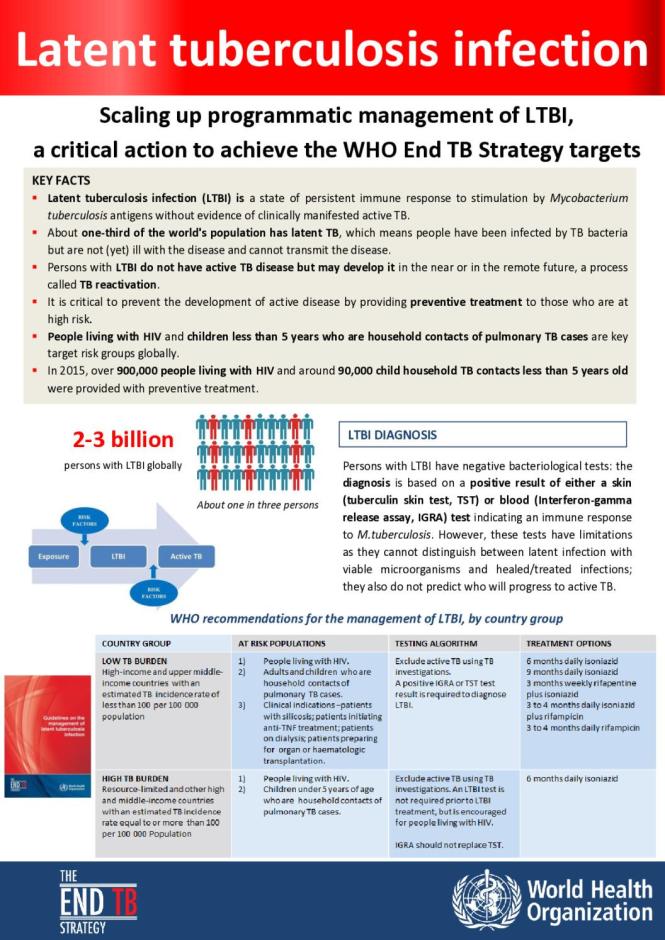
Latent tuberculosis infection (LTBI) is a state of persistent immune response to stimulation by Mycobacterium tuberculosis antigens without evidence of clinically manifested active TB. It is critical to prevent the development of active disease by providing preventive treatment to those who are at high risk.
- Latent tuberculosis infection (LTBI) is a state of persistent immune response to stimulation by Mycobacterium tuberculosis antigens without evidence of clinically manifested active TB.
- About one-third of the world's population has latent TB, which means people have been infected by TB bacteria but are not (yet) ill with the disease and cannot transmit the disease.
- Persons with LTBI do not have active TB disease but may develop it in the near or in the remote future, a process called TB reactivation.
- It is critical to prevent the development of active disease by providing preventive treatment to those who are at high risk.

Organizations:

World Health Organization (WHO)

Share article: