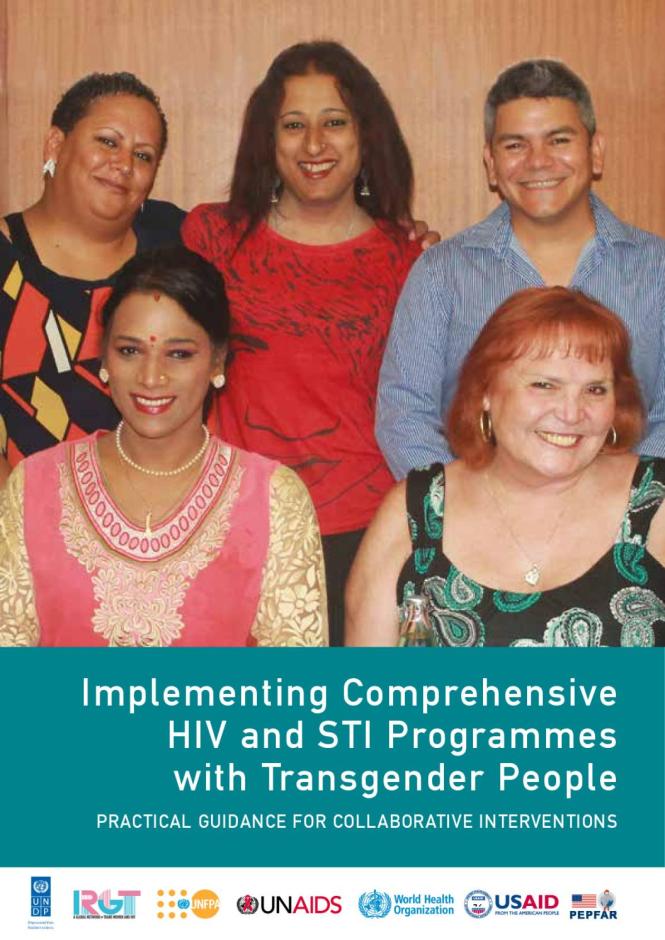
Implementing Comprehensive HIV and STI Programmes with Transgender People: Practical Guidance for Collaborative Interventions
December 31, 2016

Implementing Comprehensive HIV and STI Programmes with Transgender People: Practical Guidance for Collaborative Interventions

This tool describes how services can be designed and implemented to be acceptable and accessible to transgender women. To accomplish this, respectful and ongoing engagement with them is essential. This tool gives particular attention to programmes run by transgender people themselves, in contexts where this is possible. It is itself the product of collaboration among transgender people, advocates, service-providers, researchers, government officials and non-governmental organizations (NGOs) from around the world, as well as United Nations agencies, and development partners from the United States.
While all transgender people are potentially at risk of HIV infection, transgender women have borne the epidemiologic brunt of HIV disease. Transgender women are significantly and disproportionately affected by HIV globally. Time and again, when HIV data specific to transgender women are gathered, they indicate disturbing levels of HIV disease and burden.

This tool describes how services can be designed and implemented to be acceptable and accessible to transgender women. To accomplish this, respectful and ongoing engagement with them is essential. This tool gives particular attention to programmes run by transgender people themselves, in contexts where this is possible. It is itself the product of collaboration among transgender people, advocates, service-providers, researchers, government officials and non-governmental organizations (NGOs) from around the world, as well as United Nations agencies, and development partners from the United States.
Organizations:

World Health Organization (WHO) Joint United Nations Programme on HIV/AIDS (UNAIDS) United Nations Population Fund (UNFPA) United Nations Development Programme (UNDP)

Share article: