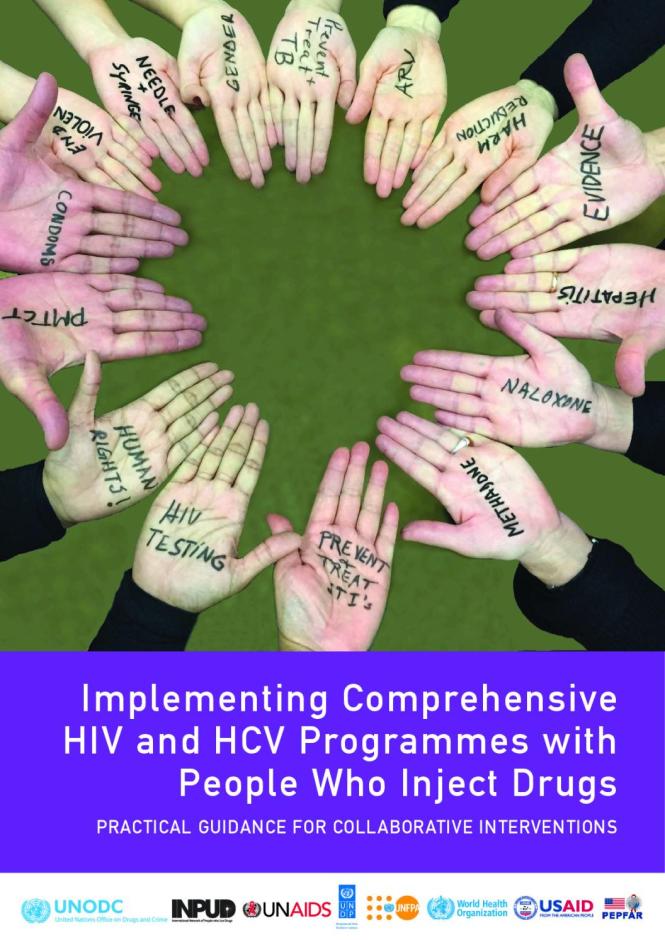
Previously published United Nations (UN) guidance documents describe the content of effective HIV and HCV prevention interventions for people who inject drugs, in the context of harm reduction and HIV prevention for key populations. UN guidance is also grounded in an approach expressed in the critical enablers described in Table 2—strategies, activities and approaches to increase the accessibility, acceptability, coverage, quality and uptake of interventions and services for key populations. This tool offers practical advice on how to implement these programmes and these approaches for and with people who inject drugs, across the full continuum of HIV and HCV prevention, diagnosis, treatment and care, aligned with UN guidance. It contains examples of good practice from around the world that may support efforts in planning programmes and services, and describes issues that should be considered and how to overcome challenges.
This tool does not seek to ignore the complex policy and legislative environment around drugs and
injecting drug use in most countries, nor the need for advocacy to confront the stigma, discrimination and human-rights violations faced by people who inject drugs.
Organizations:
World Health Organization (WHO)
Joint United Nations Programme on HIV/AIDS (UNAIDS)
United Nations Population Fund (UNFPA)
United Nations Office on Drugs and Crime (UNODC)
United Nations Development Programme (UNDP)
United States Agency for International Development (USAID)
International Network of People who Use Drugs (INPUD)
United States President′s Emergency Plan for AIDS Relief (PEPFAR)